
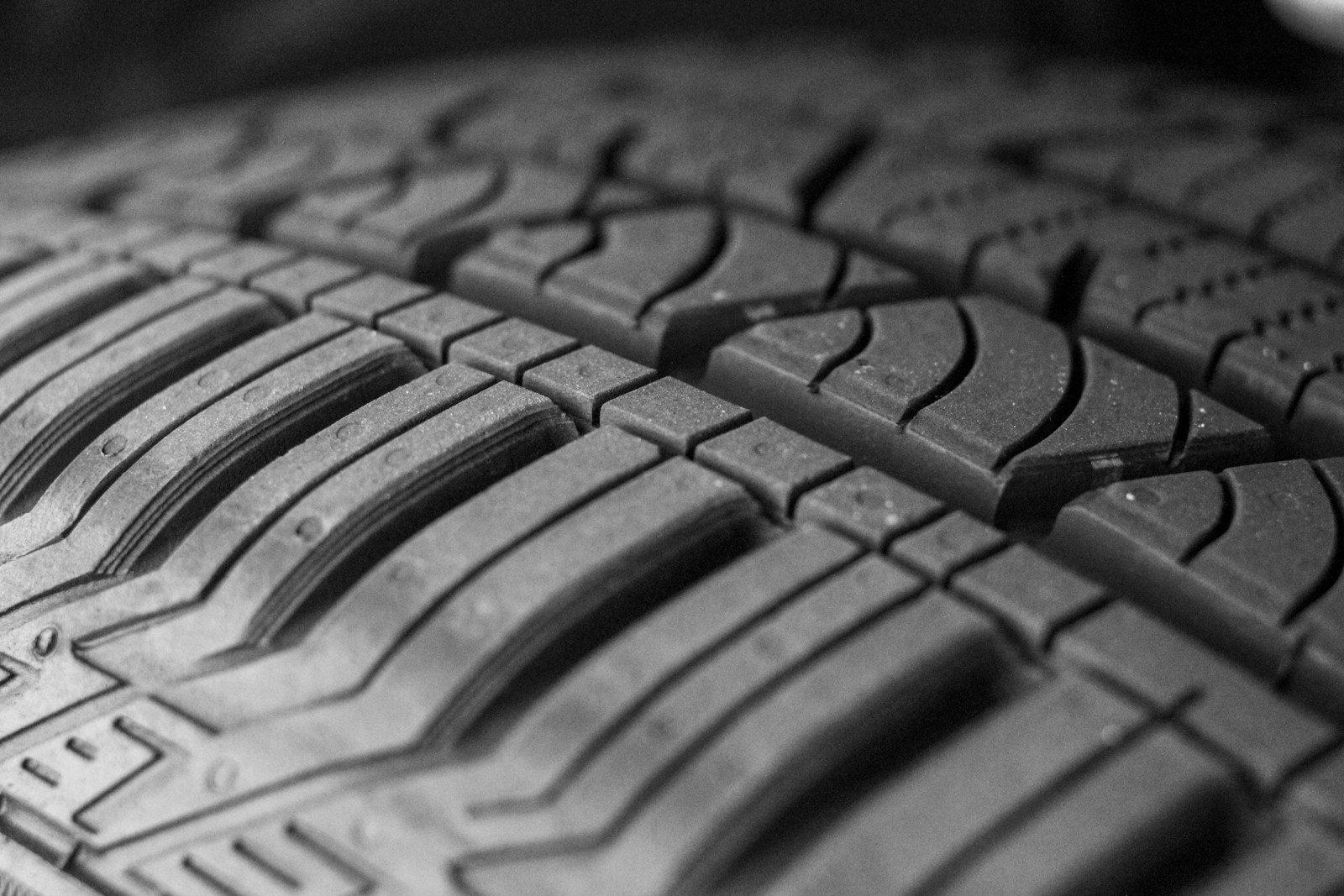
The legal minimum
In the UK the legal minimum tread depth for cars is 1.6 mm across the central three-quarters of the tread, all the way round the tyre. Below that it's illegal. You can be fined up to £2,500 and get three penalty points per tyre, so four worn tyres could, in theory, cost you your licence.
Why you shouldn't wait for 1.6 mm
Tread matters most in the wet. The grooves clear water from under the tyre so the rubber can grip. As the tread wears, it clears less water and wet stopping distances get longer, and the drop-off isn't gradual. Braking gets noticeably worse below about 3 mm. That's why many motoring organisations and tyre makers suggest replacing at 3 mm. Think of 1.6 mm as illegal, not as due.
The 20p test
You don't need a gauge for a quick check. Pop a 20p coin into the main grooves at a few points round the tyre and across its width. The outer band on the coin is about 2.6 mm wide. If the band's hidden, you've got more than 2.6 mm left. If you can see it, you're getting close and it's time to measure properly and plan new tyres.
Tyres also have tread wear indicators, little raised bars in the bottom of the grooves at 1.6 mm. When the tread's level with the bars, the tyre's at the legal limit.
Age
Rubber hardens and cracks with age, however much tread's left. Fine cracks in the sidewall or at the bottom of the grooves mean the rubber's breaking down. There's no legal age limit for car tyres in the UK, but many manufacturers recommend checking them from five years old and replacing them by ten, going by the four-digit DOT date code on the side. Low-mileage cars, caravans and trailers that sit for long spells are the usual suspects.
Damage
- A bulge on the sidewall means the cords inside have snapped, usually from a pothole or kerb. It can fail without warning and has to be replaced.
- Cuts showing the cords, or cords showing through the tread, make the tyre illegal and unsafe.
- Chunks missing from the tread or shoulder.
- A tyre that's been driven on flat and might be damaged inside.
Uneven wear and what it's telling you
If a tyre's worn more in one place than another, a new tyre's only half the fix. The cause needs sorting too, or the new one will go the same way.
| Wear pattern | Likely cause |
|---|---|
| Both outer edges worn | Under-inflation |
| Centre of the tread worn | Over-inflation |
| One edge worn | Tracking (wheel alignment) or worn suspension |
| Patchy, scalloped wear | Worn shock absorbers, wheel imbalance or loose suspension parts |
| Feathered edges on the tread blocks | Toe misalignment |
Making them last
- Check pressures monthly and before long trips, and adjust for heavy loads.
- Get the tracking checked if the steering pulls, the wheel sits off-centre, or after a hard knock on a kerb or pothole.
- Try not to scrub the tyres along kerbs when parking.
- Drive smoothly. Hard acceleration, braking and cornering all wear tyres faster.
Rather we just sorted it?
We'll come to you, at home or at work. A small deposit books it and you pay the rest when we arrive.