
Where on the tyre
A tyre can only be repaired if the damage is in the central part of the tread. On a car tyre that's roughly the middle three-quarters of the tread width. The shoulders, where the tread curves round into the sidewall, and the sidewall itself flex all the time as the tyre rolls, so a repair there wouldn't hold. Damage in those areas means a new tyre.
How big the hole is
For car tyres, the biggest repairable injury is 6 mm across. A nail or screw is almost always within that. Something bigger, a cut, or a hole that's been torn larger by driving on the tyre while it's flat usually isn't. We measure it from the inside once the object's out.
What a proper repair involves
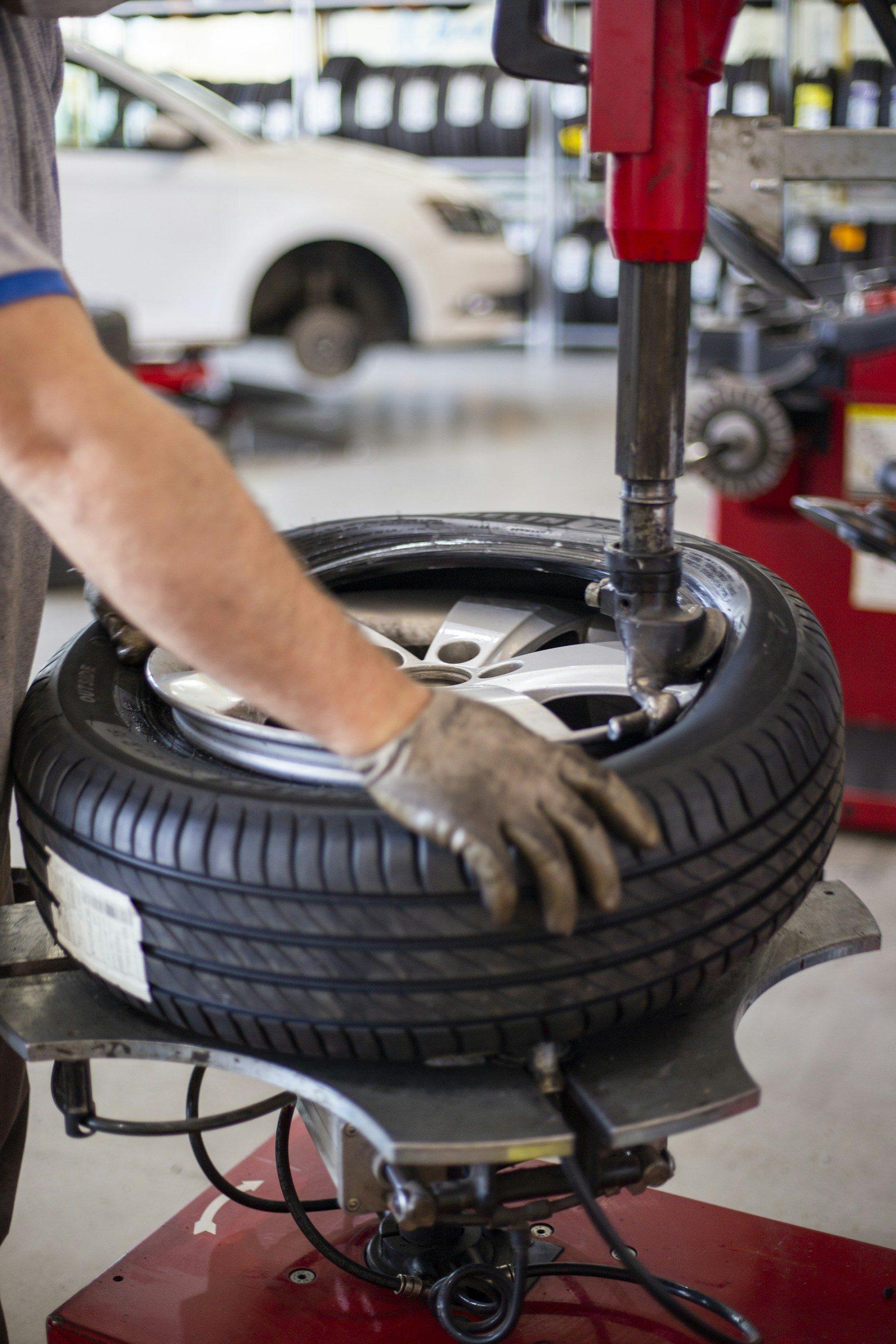
A safe repair is done from the inside of the tyre, so the tyre has to come off the wheel. The plug kits you push in from the outside aren't a permanent repair and they're no substitute.
- The tyre comes off the wheel and the nail or screw is taken out.
- We check the inside for damage to the inner liner and the cords. Creases or rubbing marks on the inner sidewall tell us it's been run flat.
- The hole is cleaned out and prepared.
- A combined plug-and-patch is fitted from the inside, filling the hole and sealing the liner.
- The tyre goes back on, gets inflated, balanced and checked for leaks.
When it can't be repaired
- The puncture's in the shoulder or sidewall.
- The hole's bigger than 6 mm, or there are several punctures close together.
- It's been driven on flat and the inner sidewall shows rubbing, creasing or bare cords.
- The tread's already at or near the 1.6 mm legal minimum, so the tyre's nearly done anyway.
- There's a bulge, a cut showing the cords, or age cracking in the sidewall.
- It's a run-flat that's been driven at low or zero pressure. Most manufacturers don't allow repairs in that case.
- Liquid sealant's been used and can't be fully cleaned off the inside.
Slow punctures
A tyre that slowly loses air over days or weeks is often a small nail or screw, but it can also be a corroded rim, a dodgy valve or a cracked alloy. Finding out means taking the tyre off and testing it, so it's worth getting looked at rather than topping it up forever. Driving on a soft tyre wears the edges, costs you fuel and makes a blowout at speed more likely.
Repair or replace: our view
If a tyre meets the repair rules, a repair is safe, permanent and cheaper, and that's what we'll recommend. If it doesn't, there's no getting round it. A new tyre, and sometimes its partner on the same axle, is the right call.
Rather we just sorted it?
We'll come to you, at home or at work. A small deposit books it and you pay the rest when we arrive.