
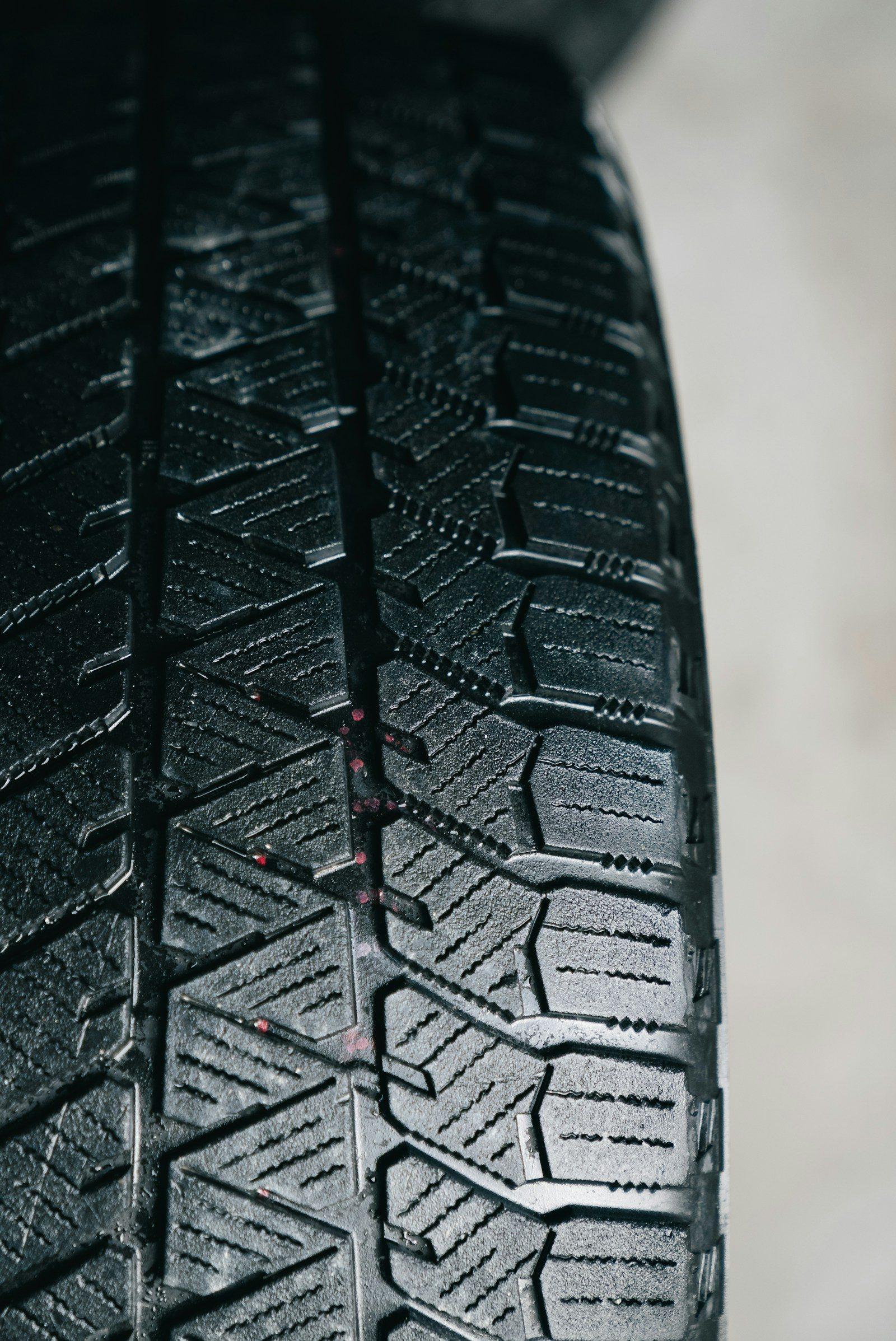
Checking tread depth
With a 20p coin
Pop a 20p coin into the main grooves. The raised band round the edge is about 2.6 mm. If it disappears into the groove, you've got more tread than that. If you can see any of the band, the tyre's getting near the limit and it's worth measuring with a gauge. Check a few points round the tyre and across its width, because tyres rarely wear evenly.
With the wear indicators
Look in the main grooves for little raised bars, usually marked on the shoulder with a small triangle or TWI. They sit at 1.6 mm, the UK legal minimum. When the tread's level with them, the tyre's at the limit and it's illegal to keep using it.
With a tread depth gauge
A basic gauge costs a few quid and gives you an exact reading. Measure the inner, middle and outer grooves at two or three points round the tyre and go by the lowest figure. Lots of drivers plan new tyres at about 3 mm, because wet grip falls away below that.
Finding the right pressure
The right pressure comes from your car maker, not the tyre maker. You'll find it on the sticker inside the driver's door frame, on the fuel flap or in the handbook. It's usually given in bar and psi, often with two sets of figures: one for normal driving and a higher one for a full load or towing. Front and back can be different.
Checking and adjusting
- Check when the tyres are cold, meaning the car's been parked a few hours or driven under a couple of miles. Driving warms the air inside and pushes the reading up.
- Take the valve cap off and press the gauge or air line squarely onto the valve until the hissing stops.
- Compare the reading with the sticker. Add air in short bursts, or press the pin in the middle briefly to let some out, until it matches.
- Do all four, and the spare if you've got one. Space-saver spares often need a much higher pressure than the road tyres.
- Put the valve caps back on. They keep muck out of the valve and act as a second seal against slow leaks.
Why pressure matters
- Soft tyres flex more, run hotter, wear the outer edges and use more fuel. Badly under-inflated tyres can fail at speed.
- Over-inflated tyres wear the centre of the tread, ride harder and put less rubber on the road.
- A tyre that needs topping up every couple of weeks probably has a slow puncture, a leaky valve or a corroded rim, and should be looked at.
Tyre pressure warning lights
Most cars sold in the UK since 2014 have a tyre pressure monitoring system. The warning light, which looks like a cross-section of a tyre with an exclamation mark, comes on when one or more tyres drops noticeably below the set pressure. It's a warning, not a replacement for checking. Some systems use sensors in the valves, which may need a service kit when a tyre's changed. Others work through the ABS sensors and need resetting after you adjust the pressures.
Your five-minute monthly check
- Tread depth with a coin or gauge at a few points on each tyre.
- Pressures on all tyres and the spare, when cold, against the sticker.
- A look round each sidewall for cuts, bulges, cracks and anything stuck in the tread.
- Valve caps present and valves in decent condition.
- The date code, if your tyres are more than five years old.
Rather we just sorted it?
We'll come to you, at home or at work. A small deposit books it and you pay the rest when we arrive.